
Why English meeting phrases matter
In many offices in Saudi Arabia, the UAE and Qatar, meetings run in English because the team comes from many countries. You may know the topic better than anyone in the room and still stay quiet because you are not sure how to say "I don't agree" without sounding rude. A small set of English meeting phrases solves most of that problem.
This guide gives you ready-to-use sentences for each moment of a meeting: opening, agreeing, disagreeing politely, suggesting ideas, interrupting, checking understanding and closing with next steps. They work in a meeting room and on Teams or Zoom calls. Learn two or three phrases from each section rather than all of them; it is better to use a few naturally than many nervously.
Opening a meeting and following the agenda
The first minute sets the tone. These phrases help whether you are running the meeting or just joining it.
If you lead the meeting
Keep the opening short and clear:
- "Thanks for joining, everyone. Let's get started."
- "The aim of today's meeting is to agree on the launch date."
- "We have three items on the agenda."
- "Let's move on to the next point."
- "We're running short on time, so let's come back to this next week."
If you join a video call
Online meetings have their own small phrases:
- "Can everyone hear me OK?"
- "Sorry, I think you're on mute."
- "You froze for a second. Could you repeat the last part?"
- "I'll share my screen. Can you see it now?"
How to agree in English
Agreeing is easy, but "yes" alone can sound flat. Choose a phrase that matches how strongly you agree.
Strong agreement
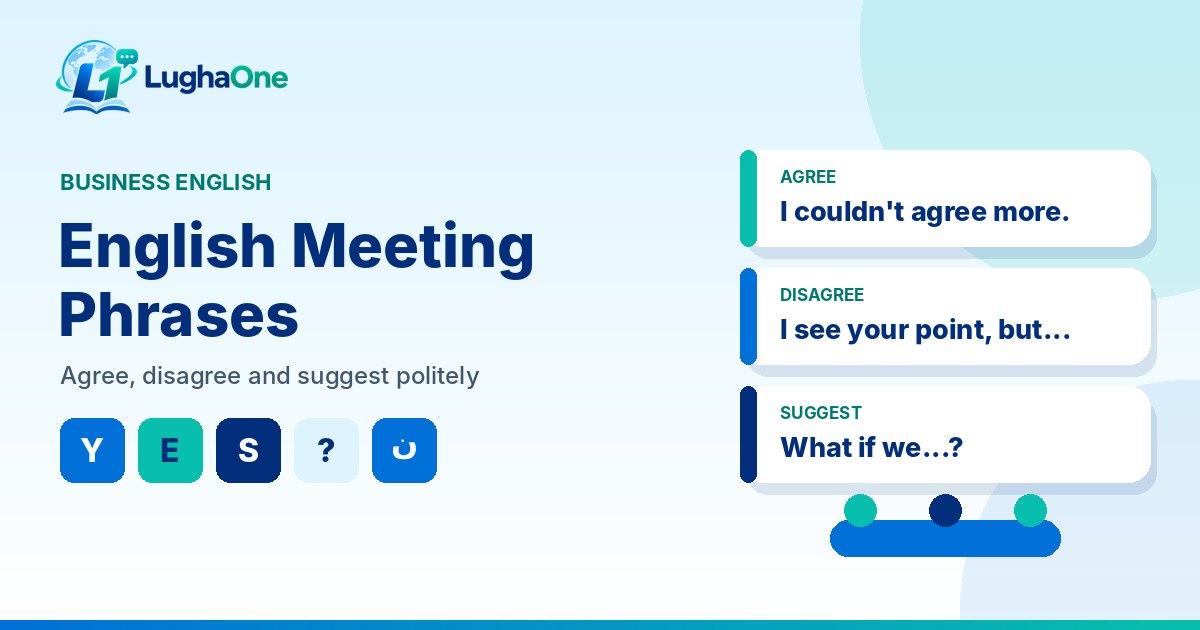
- "I couldn't agree more."
- "Exactly. That's what I was thinking."
- "That's a great point."
Partial agreement
Partial agreement is one of the most useful tools in a meeting, because it lets you agree and add a concern in one sentence:
- "I agree up to a point, but we also need to think about the budget."
- "That makes sense in general. My only concern is the timeline."
- "I agree with you on the design, but not on the price."
How to disagree politely in English
In English-speaking workplaces, direct sentences like "You are wrong" or "This is a bad idea" sound aggressive, even when the speaker does not mean it. Polite disagreement usually has three parts: show you heard the other person, add a softening word, then give your view with a reason.
- "I see your point, but I'm not sure it will work for our clients."
- "I understand what you're saying. However, the numbers suggest something different."
- "I'm afraid I don't quite agree. In my experience, customers prefer..."
- "That's an interesting idea, but have we considered the cost?"
- "I might be wrong, but I think we need more time for testing."
Softening words that help
Small words make a big difference: "I'm not sure", "maybe", "a bit", "quite" and "I think". Compare "This plan is too expensive" with "I think this plan might be a bit expensive." The message is the same, but the second version invites discussion instead of a defence.
Questions are also softer than statements. "Wouldn't it be better to wait until January?" disagrees without saying "no".
What to avoid
Avoid "You don't understand", "That's impossible" and "No, no, no". Also be careful with direct translations from Arabic: a strong phrase that sounds normal in an Arabic discussion can sound much harsher in English. When in doubt, add "I think" at the start.
Phrases for making suggestions in English
Suggestions in English often sound like questions or possibilities, not orders. This makes it easy for others to build on your idea.
- "What if we moved the deadline to next month?"
- "How about asking the sales team for their feedback?"
- "Why don't we try a smaller test first?"
- "I'd suggest sending the report before Thursday."
- "One option could be to share the work between two teams."
- "Could we look at this from the customer's side?"
A grammar note
After "How about" use the -ing form: "How about meeting on Sunday?" not "How about meet on Sunday?". After "Why don't we" use the base verb: "Why don't we meet on Sunday?". After "What if we" many speakers use the past form for a softer suggestion: "What if we started earlier?"
Interrupting politely and checking understanding
Sometimes you need to speak before someone finishes, or you did not understand a point. Both are normal in meetings if you do them politely.
Interrupting
- "Sorry to interrupt, but can I add something here?"
- "Can I just come in here for a second?"
- "If I could just add one point..."
When someone interrupts you
- "Could I just finish my point?"
- "Just one more thing, and then I'll hand over."
Asking for clarification
- "Sorry, could you explain what you mean by 'phase two'?"
- "So, if I understand correctly, you want to delay the launch?"
- "Could you go over that again, please?"
Closing a meeting with clear next steps
A good meeting ends with everyone knowing who does what and when. These phrases help you summarise and assign action items.
- "Let's quickly go over what we've agreed."
- "So the next steps are: Sara will update the slides, and I'll contact the supplier."
- "Who can take care of this?"
- "Can we have this ready by the end of next week?"
- "I'll send a summary by email after the meeting."
- "Thanks, everyone. That was really useful."
A short example: agreeing, disagreeing and suggesting
Here is how the phrases sound together in a short exchange about a product launch:
- Manager: "The aim today is to agree on the launch date. I'd like to launch on 1 December."
- Omar: "I see your point, but I'm not sure the app will be fully tested by then."
- Lina: "I agree with Omar up to a point. What if we launched to a small group first?"
- Manager: "That makes sense. So, if I understand correctly, a soft launch on 1 December and the full launch in January?"
- Omar: "Exactly. I'll send the test plan by email after the meeting."
Practise English with LughaOne
Phrases stick when you hear them, say them aloud and review them. LughaOne offers English among its 20 study languages, with 2,340 reviewed A1 and A2 lessons across 26 learning tracks. Listen at normal or slow speed, save useful phrases, and review them with flashcards, quizzes and review sessions. The AI tutor answers questions about each lesson.
English also includes pronunciation practice with AI accuracy and fluency scores, so you can practise sentences like "I couldn't agree more" and track your progress in your pronunciation history. Everything is included in the 3-day free trial, no card needed, and family plans cover up to six accounts.
Keep exploring
Family Learning
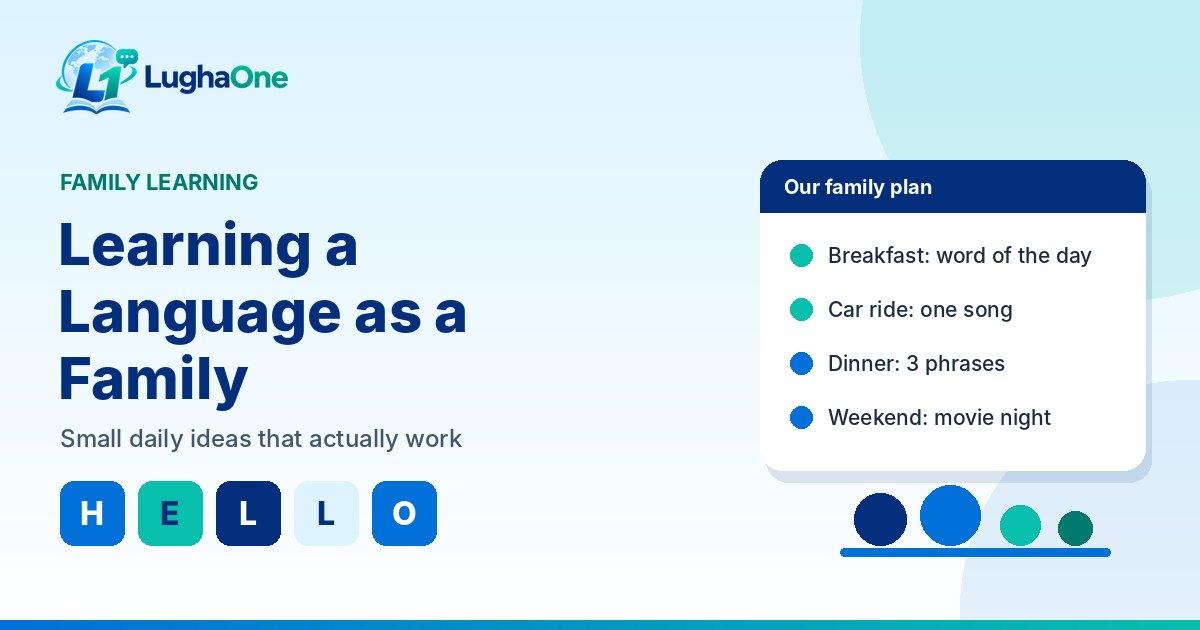
Learning a Language as a Family: Ideas That Actually Work
Learning a new language together can be one of the best family projects you start this year, as long as you keep it short, playful and built into the routines you already have.
Career English
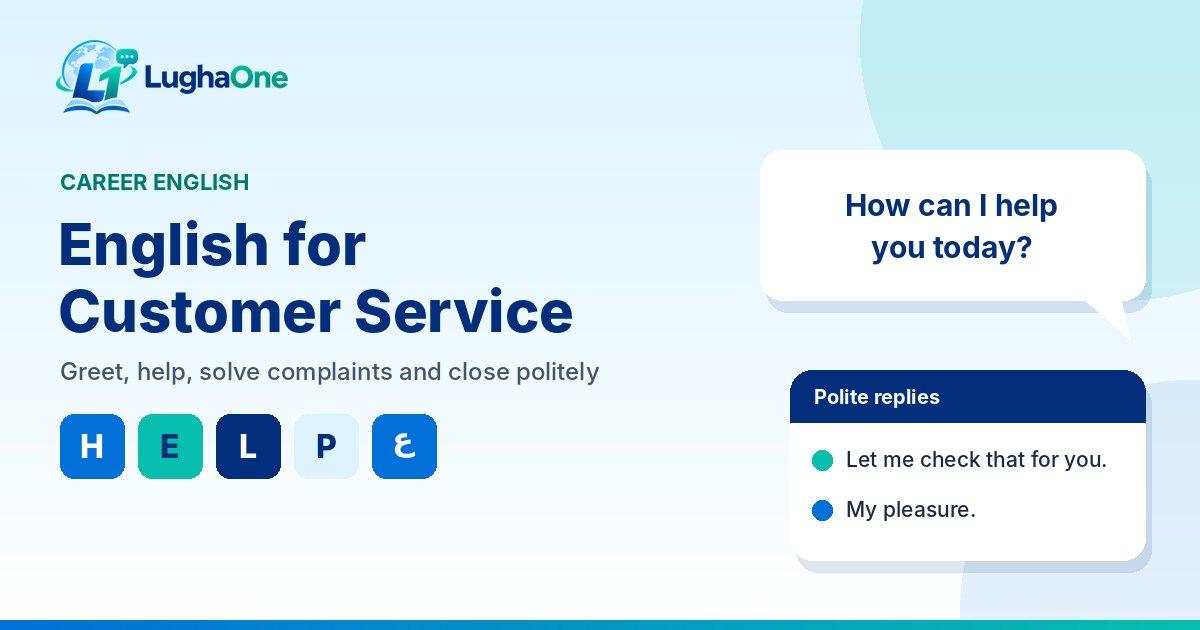
English for Customer Service Jobs: Phrases That Sound Professional
Good customer service English is not about long words. It is about a small set of polite, clear phrases you can use every day in shops, hotels, restaurants and help desks.
Chinese for beginners
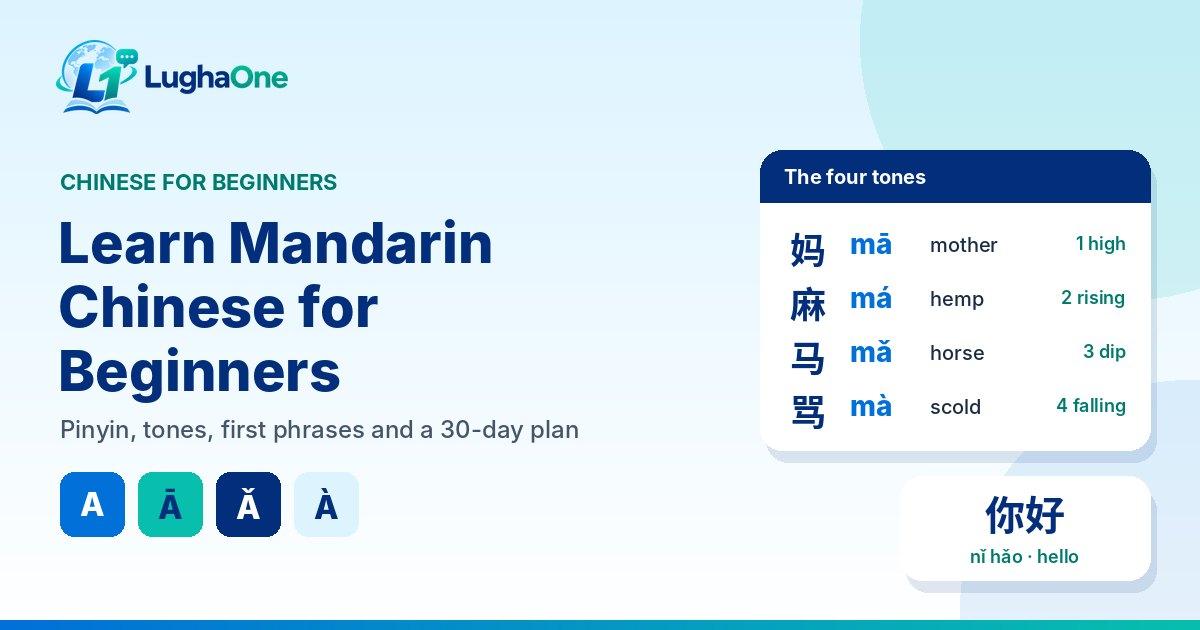
Learning Mandarin Chinese: A Realistic Starting Plan for Beginners
Mandarin looks impossible from the outside, but the first month is very manageable if you start in the right order: pinyin and tones first, then survival phrases, simple sentence patterns and your first characters.
Learn languages
Learning French as an Arabic Speaker: What Is Easy and What Is Hard
Arabic speakers start French with more advantages than they think: the French r, grammatical gender and adjectives after the noun all feel familiar. Here is what comes easily, what takes practice, and how to start.
Business English
English Phone Call Phrases: Bookings, Support and Work Calls
Phone calls are harder than face-to-face English: no gestures, no lips to read, and the other person is waiting. These ready-to-use phrases for work calls, bookings and customer support help you sound calm, clear and polite.
Study Skills
Spaced Repetition: Remember New Vocabulary for Longer
You learn twenty new words on Monday and remember five by Friday. Spaced repetition fixes that: review each word just before you would forget it, at growing intervals. Here is how it works and how to use it with paper or an app.
Family Learning
Teaching Kids Arabic at Home: A Simple Weekly Routine
A practical plan for Arab families abroad and mixed families: short daily Arabic moments, a seven-day routine, how to handle dialect and Modern Standard Arabic, and how to keep going when your child answers in English.
Learning Tips
How AI Can Help You Practise Speaking a New Language
Speaking is the skill most learners practise least. Here is what AI speaking practice can and cannot do, a simple 20-minute routine, ready-to-use role-play prompts and tips for Arabic speakers learning English.
Business English
English Small Talk at Work: Natural Phrases for the Office
Short, natural English for the moments before meetings, in the lift and at the coffee machine: how to start, what to talk about, how to keep it going and how to leave politely.
Learn Arabic
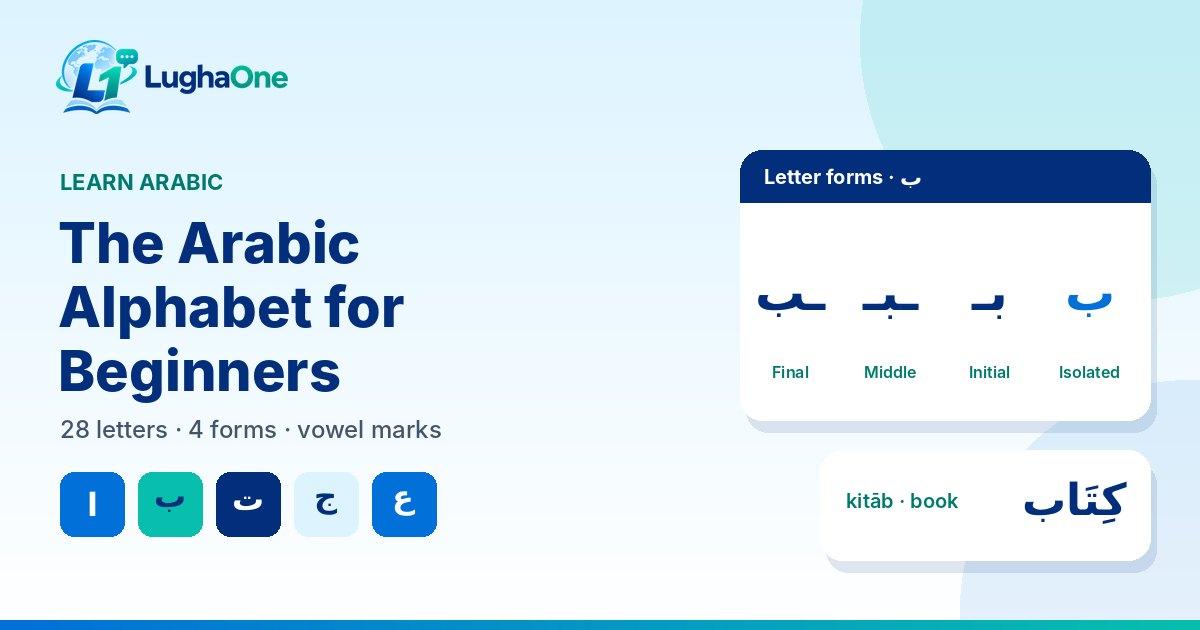
The Arabic Alphabet for Beginners: Letters, Shapes and Sounds
Learn to read Arabic step by step: how the script works, the 28 letters grouped by shape, how letters change at the start, middle and end of a word, vowel marks and a two-week practice plan.
Learning Tips
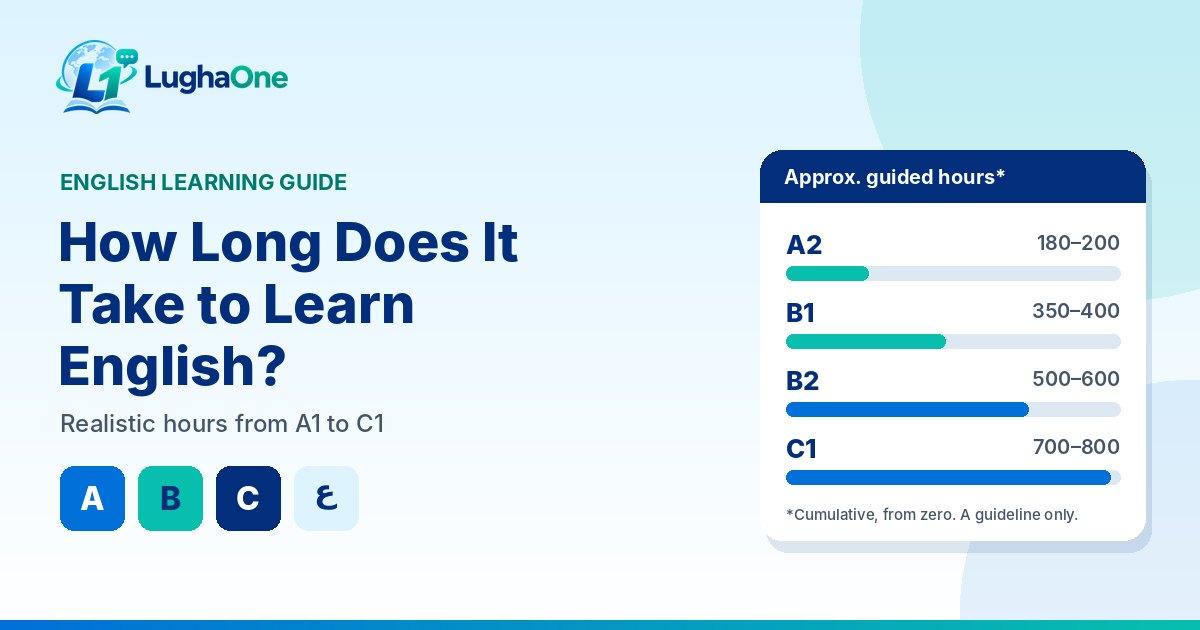
How Long Does It Take to Learn English? A Realistic Answer
A realistic answer in hours, not promises: approximate study time for each level from A1 to C2, the factors that change it, and simple weekly plans for busy learners.
Arabic Dialects
Emirati Arabic Phrases for Everyday Life in the UAE
The Emirati words and phrases you will actually hear in Dubai, Abu Dhabi and Sharjah: how the dialect sounds, everyday words, office and shop phrases, directions for taxis and Emirati hospitality.
Arabic for Beginners
Arabic Greetings and Responses: What to Say and How to Reply
In Arabic, almost every greeting has a set reply. Learn the pairs for every time of day, how to ask how are you across the region, what to say on Ramadan and Eid, and the etiquette that goes with them.
Practical English
English for Travel: Airport, Hotel and Taxi Phrases You Will Actually Use
The English you need from the check-in desk to your hotel room: short, polite phrases for every step of the trip, the questions officers ask, and easy fixes for common mistakes.
Arabic Dialects
Saudi Arabic Phrases for Expats: Work, Shops and Daily Life
The everyday Saudi Arabic you will hear in Riyadh, Jeddah and beyond, from hala wallah and abshir to bikam hadha, with simple notes on Najdi and Hijazi speech.
English Grammar
12 English Grammar Mistakes Arabic Speakers Make (and How to Fix Them)
Twelve grammar mistakes that come from thinking in Arabic while speaking English, why each one happens, and a simple correction you can start using today.
Business English
Business English Email Phrases: How to Write Clear, Professional Emails at Work
Ready-to-use phrases for every part of a work email, from the greeting to the sign-off, with a sample email you can adapt and the small mistakes that make emails sound less professional.
Business English
English Job Interview Questions and Answers: A Guide for Arabic Speakers
How to answer 'Tell me about yourself', 'Why should we hire you?' and other common interview questions in clear, confident English, with sample answers you can adapt.
Pronunciation
English Pronunciation for Arabic Speakers: Fix P/B, V/F and More
Why 'parking' turns into 'barking' and 'very' into 'fery', and simple daily drills that make your English clearer in meetings, interviews and travel.
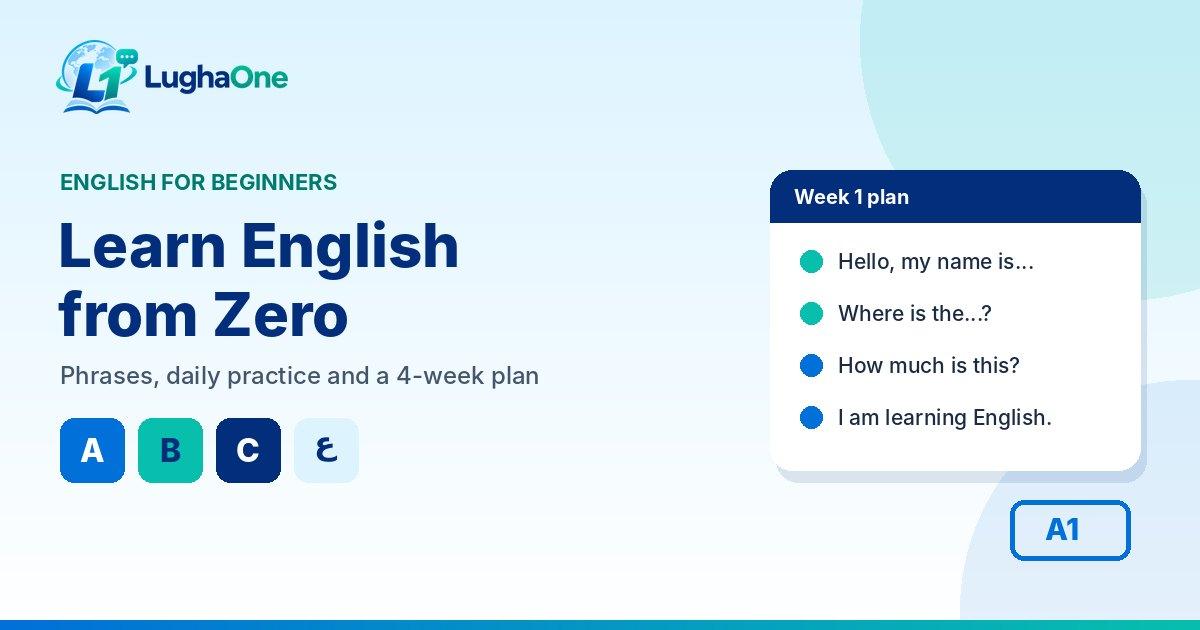
English learning
How to Learn English from Zero: A Practical Beginner's Guide
Start speaking with confidence: the first phrases to learn, a 15-minute daily routine, beginner mistakes to avoid and a simple four-week plan.
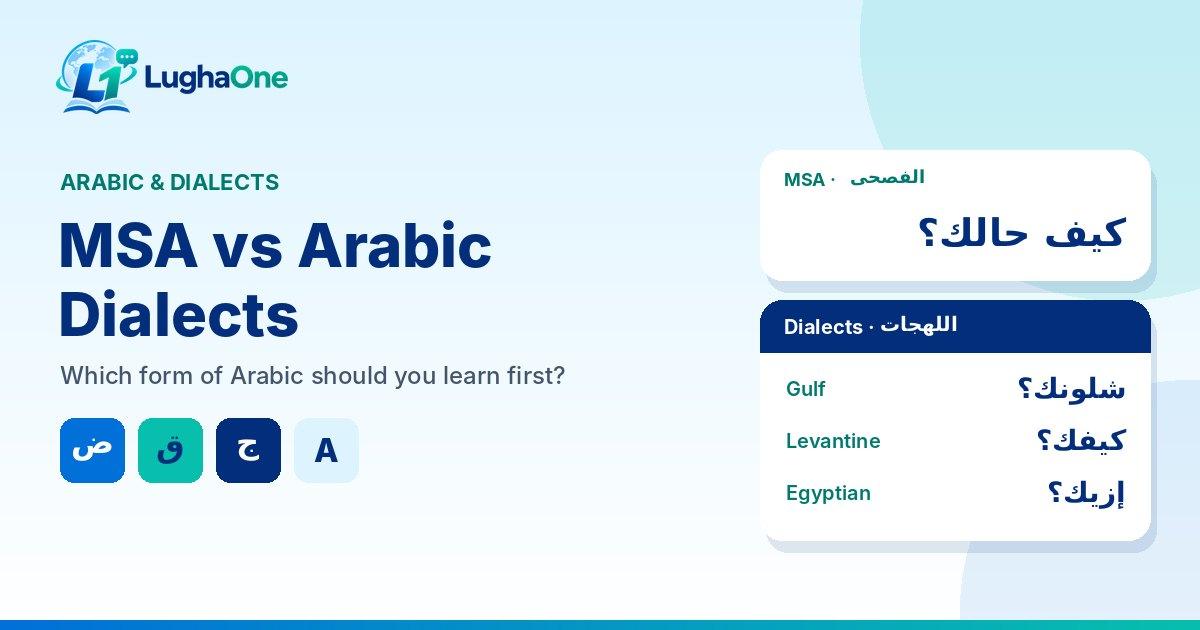
Arabic & dialects
Modern Standard Arabic vs. Arabic Dialects: Where Should You Start?
MSA or spoken Arabic? See how they differ in real examples, from 'How are you?' to the letter qaf, and choose the path that fits your goals.